A practical look at routing aircraft, passengers, baggage, and production equipment across a demanding international tour calendar.
A world tour is a chain of immovable show dates connected by a highly mobile production. Artists, crew, instruments, wardrobe, and technical teams may need to cross borders overnight and begin work soon after landing. Air charter can create control, but only when it is integrated into the complete touring schedule.
Build the operating plan
Routing should begin with curfews, airport operating hours, customs availability, crew duty limits, and realistic post-show departure times. The closest airport is not always the best option if it cannot process the traveling party or equipment after the performance. Each sector should also account for hotel release times, venue load-out, and local ground restrictions.
Coordinate the traveling group
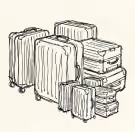
Touring groups are not interchangeable. Some passengers need to arrive first for setup, while others can travel later. Instruments and production cases may require special handling or separate capacity. A movement plan should identify priority passengers, baggage categories, documentation owners, and the person responsible for final manifest approval.
Prepare for change
International touring needs alternatives for weather, technical delays, customs issues, and schedule changes. Backup airports and replacement capacity should be assessed before entering a region. When a show runs late, the team needs a known sequence for updating the operator, handling agent, hotel, and next venue.
Planning checklist
- Plan routing around venue and airport operating limits
- Separate advance teams from the main touring party
- Confirm customs documents and baggage requirements
- Pre-evaluate alternatives in every critical region
The takeaway
The aircraft is one part of a larger touring system. When aviation planning is connected to venues, hotels, customs, and production milestones, the travel schedule can support the performance schedule instead of competing with it.